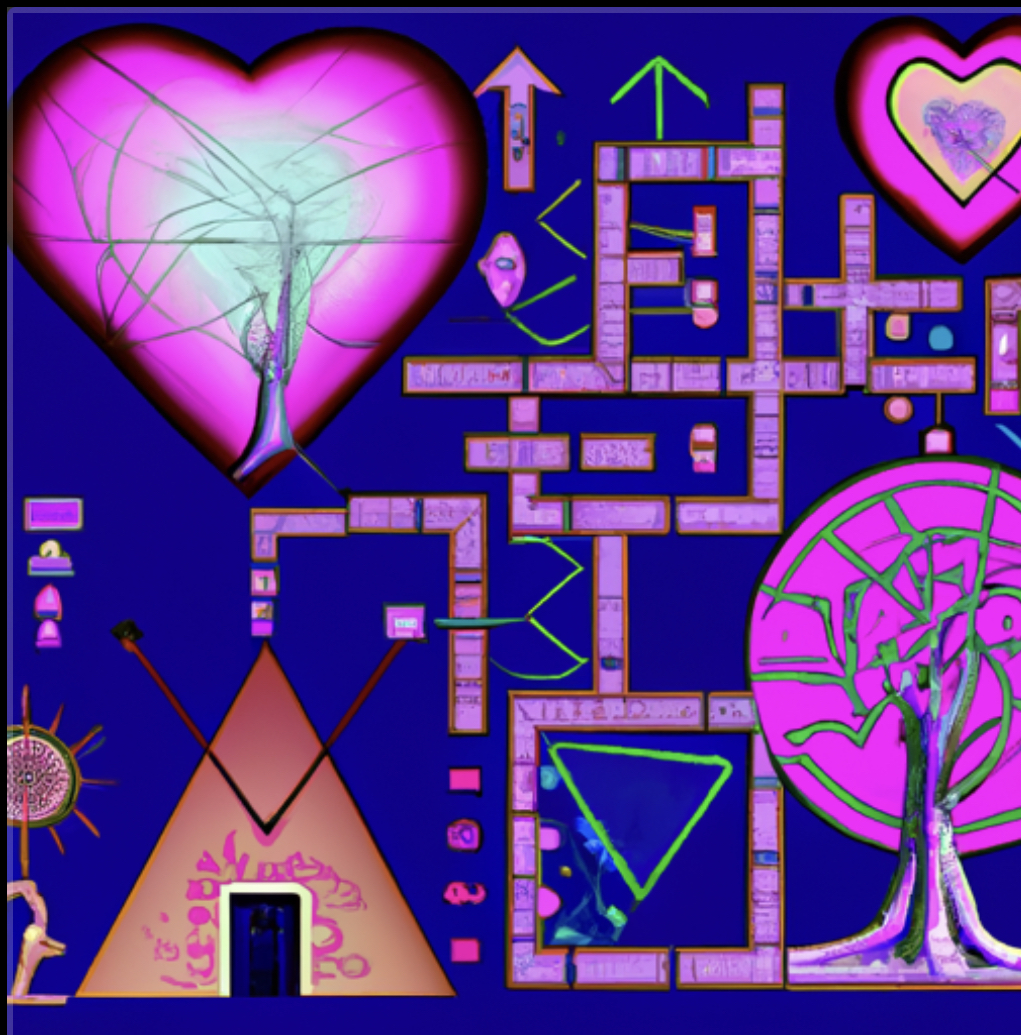
When people think about leadership as a shape, they often envision various forms that symbolize different aspects of this concept called leading. When I researched this question, I recognized the shapes seen by engineering-minded people and the forms of artistic and creative minded people.
This diversity of shapes is why leadership is one of the most fascinating, timeless and learnable nonlinear subjects known to humankind. The subject is as concrete as it is fluid. Leadership is an application as much as a concept.
So why do we see different shapes? Who hasn’t lead in times of problem solving? Who hasn’t lead in times of growth? Who hasn’t lead in times of difficulty? These different contexts offer different visions and applications of leaderly behaviors.
Here are some common shapes associated with leadership:
1. Triangle: The triangle represents a strong and stable foundation, symbolizing the need for a solid base of knowledge, skills, and values in effective leadership.
2. Circle: The circle represents inclusivity and collaboration, highlighting the importance of creating a sense of unity and fostering teamwork among individuals.
3. Arrow: An arrow signifies direction and forward momentum, representing the ability of a leader to guide and inspire others towards a common goal or vision.
4. Puzzle pieces: Puzzle pieces symbolize the idea that leadership involves bringing together diverse perspectives and strengths to create a cohesive whole.
5. Ladder: A ladder represents progression and growth, illustrating how leaders provide opportunities for personal and professional development for themselves and those they lead.
6. Shield: A shield represents protection and support, signifying the role of a leader in ensuring the well-being and success of their team members.
7. Spiderweb: A spiderweb signifies interconnectedness and adaptability, emphasizing the need for leaders to navigate complex situations, foster relationships, and make strategic decisions.
8. Tree: A tree symbolizes strength, resilience, and growth, highlighting how effective leaders provide stability, nurture their team, and facilitate continuous development.
9. Puzzle maze: A puzzle maze represents problem-solving and critical thinking, illustrating how leaders navigate challenges and find innovative solutions.
10. Heart: A heart symbolizes compassion and empathy, emphasizing the importance of emotional intelligence and the ability to connect with and understand others in effective leadership.
Across different cultures and different geographies I have seen these shapes in the actions and attitudes of other people, many of whom were not like me.
There is no doubt a science to leadership, and it is equally true that there is an art to leadership. When you combine the art and science of leading together with your purpose and personality, then so many of these shapes of leadership come to life.