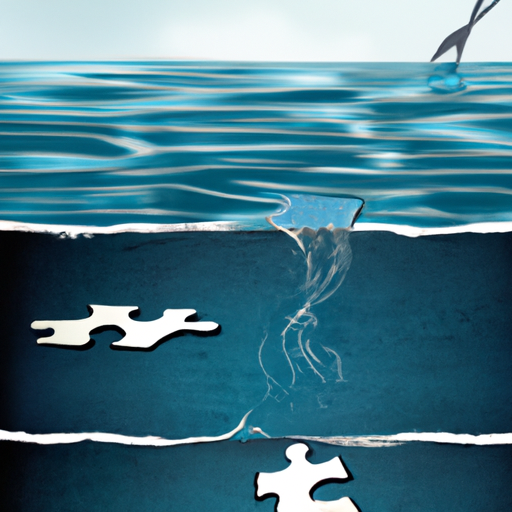
As a lifelong problem-solver, I've always been fascinated by the unique ways in which people tackle tough challenges. The more complex the problem, the more creative the solution often needs to be!
Embracing a Different Perspective
One of the key aspects of creative problem-solving is looking at a problem from a new angle. It reminds me of an incident from my early career. We were faced with a logistical issue that seemed insurmountable. It was only when we started to question the very foundation of our approach that we realized our constraints were self-imposed. By shifting our perspective, the solution became clear.
This approach is echoed in many fields. For instance, in mathematics, complex problems are often solved by breaking them down into simpler parts or by approaching them from an unexpected angle. The famous mathematician George Pólya once said, "If you can't solve a problem, then there is an easier problem you can solve: find it."
Learning from Nature
Nature is an incredible problem-solver. The field of biomimicry demonstrates this by taking inspiration from natural designs and processes to solve human problems. For example, the structure of a bird's wing has inspired more efficient aerodynamic designs in aviation. Similarly, the way certain plants conserve water has led to innovative solutions in sustainable architecture.
Cross-Disciplinary Collaboration
I've always believed that collaboration across different disciplines can lead to extraordinary solutions. When experts from various fields come together, they bring different viewpoints and skill sets, often leading to breakthroughs that wouldn't be possible in a single-domain approach. This is evident in technology, where interdisciplinary teams are behind some of the most groundbreaking innovations.
The Power of 'What If'
Asking 'what if' can be a powerful tool in creative problem-solving. It allows us to step outside the realm of what's currently possible and explore new territories. This mindset is at the heart of scientific advancements. When scientists and innovators ask 'what if,' they are opening the door to new possibilities, whether it's in medicine, space exploration, or digital technology.
Embracing Failure as a Stepping Stone
Every creative problem-solver knows that failure is not the opposite of success; it's a part of it. Each failed attempt is a lesson that brings us closer to the solution. This is a concept I learned early in my career and have seen demonstrated time and again in successful businesses and research projects.
So...
The art of solving hard problems lies in the ability to think creatively, embrace new perspectives, learn from various sources, collaborate across disciplines, and be willing to fail and learn. These principles have guided me in my journey and have been the bedrock of some of the most innovative solutions in the world. The next time you're faced with a difficult challenge, remember that the key might just lie in approaching it in a way no one has thought of before.