
Leader Talks
Listen to our latest Leader Talks
Short audio conversations on leadership, management, and coaching, from the Leaderly team.

Leadership by Design: Lessons from Architects and Planners
Leaderly
This discussion draws parallels between leadership and the principles of design used by architects and planners. Just as great buildings rely on strong foundations, thoughtful structure, and flexibility, effective leadership requires careful planning and adaptability. Leaders must design environments that support growth, clarity, and collaboration. Three key design-inspired ideas—intentional structure, user-centered thinking, and adaptive planning—offer powerful tools for leading teams. These concepts encourage leaders to approach challenges with creativity, empathy, and strategic foresight. Viewing leadership through a design lens helps build organizations that are both resilient and purpose-driven.

The 2 AM Leadership Crisis
Leaderly
Leadership often comes with sleepless nights and unspoken worries that linger long after the workday ends. At 2 AM, when the world is quiet, many leaders find themselves alone with the weight of responsibility, tough decisions, and personal doubts. This discussion explores the often-hidden emotional burdens leaders carry—fear of failure, imposter syndrome, and the pressure to appear strong—offering a candid look at the human side of leadership, where vulnerability meets courage. Acknowledging these internal struggles can lead to deeper self-awareness and more compassionate leadership. True strength lies not in perfection, but in facing uncertainty with honesty and resilience.

Leadership Lessons from Children
Leaderly
Leadership isn’t just about strategic thinking or executive decision-making; sometimes, the best leadership lessons come from the simplicity and purity of a child’s perspective. This dialogue explores three key leadership lessons we can learn from children: curiosity, honesty, and authenticity.

Leadership Lessons from Rich Dad, Poor Dad
Robert Kiyosaki
Robert Kiyosaki's "Rich Dad, Poor Dad" is a timeless book about achieving financial independence, but its lessons go beyond money—they also apply to leadership. This discussion highlights three key takeaways: cultivating a growth mindset to foster innovation, utilizing financial intelligence for strategic decision-making, and embracing calculated risks to drive progress.

The Man's Search for Meaning
Viktor Frankl
This discussion presents leadership lessons drawn from Viktor Frankl's Man's Search for Meaning. Three core ideas are highlighted: finding and communicating a clear purpose, maintaining control over one's response to adversity, and prioritizing service to others.

The 10X Rule for Leaders
Grant Cardone
Grant Cardone's The 10X Rule advocates for massive action as the key to success. This dialogue highlights how leaders can use this principle to inspire ambitious goals, promote significant effort, and cultivate a resilient team culture.

Unlocking the Power of Why
Simon Sinek
Discover the power of purpose-driven leadership with Simon Sinek’s Start With Why. This dialogue explores the Golden Circle—Why, How, and What—and how starting with why inspires trust, loyalty, and action. Learn how to lead with purpose and unlock meaningful impact.

Everyday Leadership: The Barista, the Bus Driver, and the Boss
Leaderly
In our daily lives, leadership isn't confined to titles or corporate offices. Inspiring leadership qualities often shine through in everyday interactions with ordinary people like baristas, bus drivers, and bosses who go beyond their roles to positively impact others. This discussion highlights how these individuals exemplify leadership in action.

AI and Leadership: Will Robots Lead Better Than Humans?
Leaderly
As artificial intelligence (AI) continues to advance, it is reshaping leadership roles across industries. While AI offers powerful tools to improve decision-making, streamline processes, and provide data-driven insights, the question arises: can robots lead better than humans? This discussion explores the intersection of technology and leadership, including how AI is shaping leadership roles.

The Influence of Art and Creativity on Leadership
Leaderly
Leadership is both an art and a science. While strategies and analytics are essential, creativity fuels innovation, adaptability, and vision. The dialogue highlights how engaging with art, music, or other creative outlets can inspire innovative leadership styles.

Leading with Humor - Can Comedy Save Your Team?
Leaderly
Humor in leadership is more than just cracking jokes; it’s a powerful tool that can transform your team dynamics, enhance morale, and spark creativity. This discussion talks about how humor can disarm tension, build camaraderie, and foster innovation in your team.

What Leaders can Learn from Villains
Leaderly
Leadership lessons can come from unexpected places—even from notorious villains. While their actions often serve as cautionary tales, understanding the motives, strategies, and flaws of infamous figures like Thanos or Darth Vader can illuminate valuable lessons in ethical decision-making.

Leadership Lessons from Pop Culture Icons
Leaderly
Discover how beloved characters like Ted Lasso, The Avengers, and Zelda embody essential leadership traits that can inspire real-life success. From Ted’s empathetic coaching to the Avengers’ collaborative teamwork and Zelda’s courageous vision, this discussion explores practical lessons on building trust, fostering collaboration, and leading with resilience. Perfect for anyone looking to elevate their leadership game with insights from the world of pop culture.

Leading Remote and Hybrid Teams
Leaderly
This discussion outlines the challenges and opportunities of managing remote and hybrid teams, emphasizing the importance of clear communication strategies and utilizing project management tools to maintain productivity.

Leading Through Storytelling
Leaderly
This discussion emphasizes the importance of storytelling as a leadership tool, explaining how stories create emotional connections, simplify complex information, and drive organizational change by inspiring and motivating teams. Examples from prominent leaders like Steve Jobs, NASA personnel, and Howard Schultz illustrate how effective storytelling can humanize leaders, unify teams around shared goals, and facilitate the adoption of new strategies.
Optimizing Time Management
Leaderly
This discussion focuses on efficient time management strategies for leaders. Key strategies include strategic planning and prioritization to align efforts with organizational goals, minimizing distractions to enhance focus, and effective delegation to maximize team capabilities and free up the leader's time for strategic tasks. The dialogue emphasizes adaptability, regularly reassessing strategies, and fostering a productive work environment for the entire team. Effective communication and providing support are highlighted as crucial for successful delegation. The overall goal is to improve leadership efficiency and effectiveness through proactive time management.
Maximizing Productivity
Leaderly
This discussion outlines strategies for maximizing team productivity. Effective leadership is highlighted as crucial, focusing on establishing SMART goals, fostering open communication and collaboration, and prioritizing employee well-being. The dialogue emphasizes the importance of regular goal reviews, diverse skill utilization, and work-life balance to achieve sustainable high performance. It uses the quote “Efficiency is doing better what is already being done” to frame the importance of optimizing existing processes. Practical applications are suggested through examples and reflection prompts.

Wintering - How Solitude Can Unlock Our Very Best
Katherine May and Leaderly
This conversation class analyzes Katherine May's book, Wintering, which draws parallels between the natural winter season and periods of hardship in human life. The discussion highlights three key lessons: the importance of slowing down during difficult times, the potential benefits of embracing challenges, and the acceptance of life's cyclical nature. This leadership discussion emphasizes learning from nature's resilience and finding inner strength during adversity. Sometimes the way out, is in.
Live E.P.I.C. - Virtues in Leading
Kristin Noto
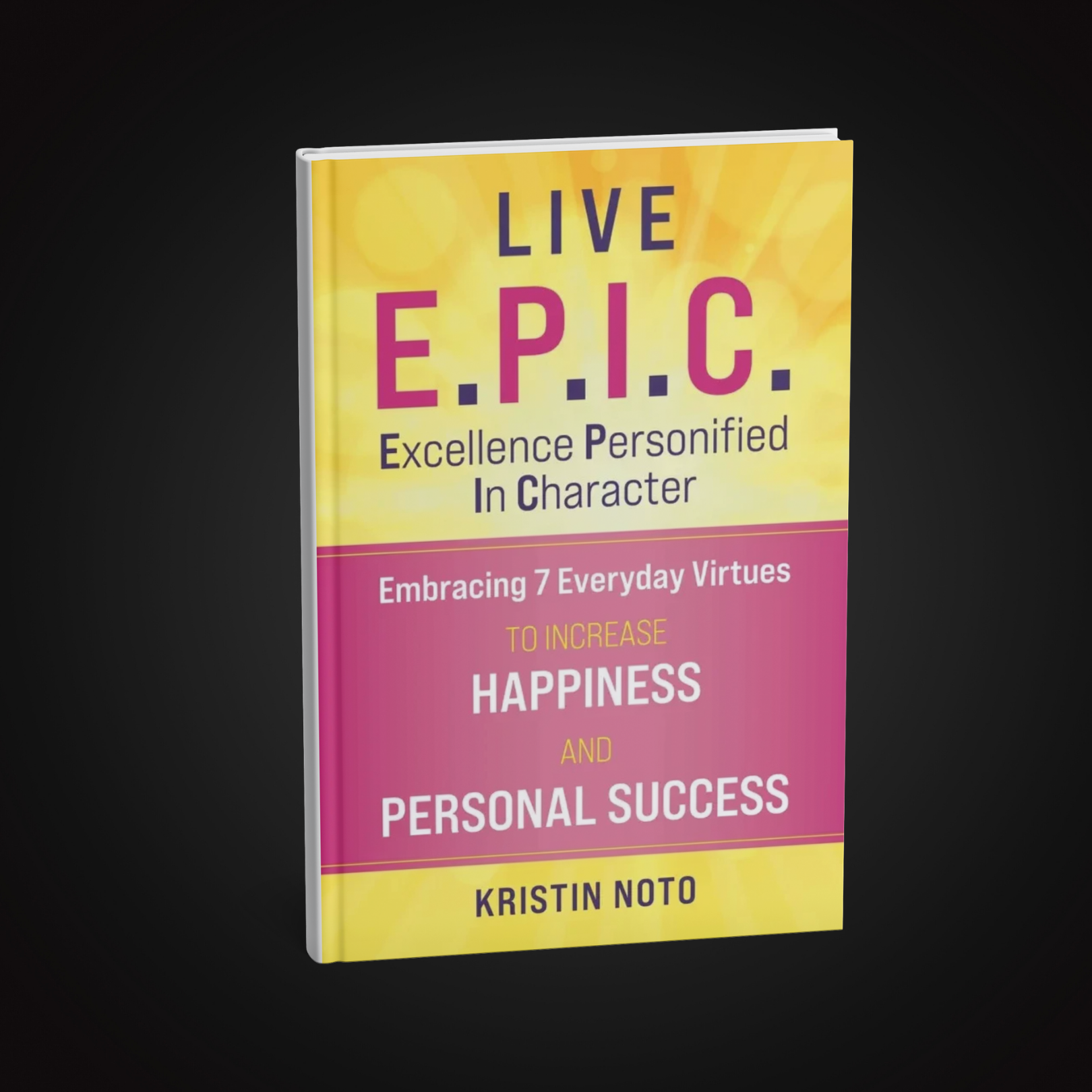
This LeaderTalk based on Kristin Noto's Live E.P.I.C. promotes personal growth through the cultivation of seven everyday virtues: faith, charity, honesty, wisdom, perseverance, prudence, and gratitude. The discussion illuminates personal anecdotes, examples from history and popular culture, and scientific research to illustrate how excelling in these virtues leads to increased happiness and success. Noto emphasizes the importance of mindset, forgiveness, and emotional contagion in achieving a fulfilling life. Your mind will absorb the interconnectedness of these virtues and their historical significance across various cultures and religions. What holds you back from the mantra to “live epic?” Lean in to leading as you exercise these virtues in the palm of your hand.

The Neuroscience of Leadership
Leaderly
The Neuroscience of Leadership applies brain science to enhance leadership practices, focusing on decision-making, team motivation, and stress management. This discussion emphasizes optimizing prefrontal cortex function for better decisions, leveraging the brain's reward system for motivation, and managing stress to maintain cognitive function. Key strategies include stress reduction, sleep improvement, recognition for dopamine release, and mindfulness for emotional regulation.

What is Emotional Agility?
Leaderly
Emotional agility, as defined by psychologist Susan David, is a crucial skill for navigating life's challenges. It involves acknowledging and accepting emotions without judgment, leading to better decision-making aligned with personal values. Leaders who demonstrate emotional agility create supportive environments that promote well-being and productivity. Research confirms that emotional agility is linked to improved mental health and performance in both personal and professional contexts. This discussion talks about fostering resilience in individuals and teams and how emotional agility enables them to adapt to change and stress more effectively.