
Leader Talks
Listen to our latest Leader Talks
Short audio conversations on leadership, management, and coaching, from the Leaderly team.

The Biology of Belief
Bruce Lipton’s work challenges genetic determinism by proposing that our thoughts and environment exert more control over our health than our DNA. He argues that the cell membrane, rather than the nucleus, acts as the "brain" of the cell by interpreting external signals and translating them into biological responses.

Transform vs. Transact
In this LeaderTalk, Drew Bartkiewicz contends that the current corporate obsession with extensive video course libraries and digital certificates hinders genuine professional growth. He contends that this "transactional" style of learning results in shallow knowledge and fails to foster the long-term behavioral changes necessary for effective leadership. Instead of consuming unrelated content rapidly, the Drew suggests that true development requires incremental habits, introspection, and active reinforcement

Navigating the Selection Process Successfully
Leaderly
Navigating the selection process successfully requires professionalism, resilience, and strategic awareness beyond the interview itself. This dialogue emphasizes that follow-up communication, patience, and tone continue to shape impressions during decision periods. Candidates learn how resilience supports confidence during delays, uncertainty, or rejection. Strategic awareness helps interpret silence and feedback objectively rather than emotionally. Thoughtful evaluation of offers ensures decisions align with long-term goals and values.

Asking Insightful Follow-Up Questions
Leaderly
Asking insightful follow-up questions transforms interviews into meaningful, two-way conversations. This conversation highlights how thoughtful questions demonstrate active listening, preparation, and genuine curiosity. Candidates learn to reference what has been shared rather than relying on generic or scripted questions. Strategic follow-up questions explore priorities, challenges, and expectations, revealing how candidates think about impact. Timing and tailoring questions to the interviewer’s role increase relevance and professionalism.

Preparing for Virtual and In-Person Interviews
Leaderly
Preparing for virtual and in-person interviews requires understanding how different formats shape expectations and performance. The discussion emphasizes that effective interview preparation goes beyond answers and includes environment, logistics, and presence. Candidates learn how virtual interviews demand intentional setup, tested technology, and strong on-camera communication. In-person interviews require planning for travel, attire, and physical surroundings to support confidence and focus. Practicing responses across both formats builds adaptability and reduces anxiety.

The Hard Hat - A True Story
Michael Koryta’s novel, Hard Hats, centers on the taxing yet rewarding experiences of an urban construction worker. The narrative examines how manual labor shapes a person's identity and fosters a deep sense of community among those in demanding industries. By focusing on the protagonist's daily struggles, the book highlights the personal growth and resilience required to navigate a difficult environment.

Executive Secrets for Faster Hiring
This LeaderTalk explores the internal mechanics of corporate recruitment to help job seekers navigate the journey from application to final offer by understanding how it works from the Organization's side. It emphasizes that hiring is a complex, multi-stage process involving various stakeholders, such as recruiters and hiring managers, who each evaluate different aspects of a candidate's profile.

Interview Prep: Medical Sales
To achieve interview success, this LeaderTalk emphasizes that confidence is a skill developed through meticulous preparation rather than innate talent. The author advocates for creating a structured prep plan that includes researching the company, defining a unique value proposition, and curating a bank of quantifiable stories using the STAR method.
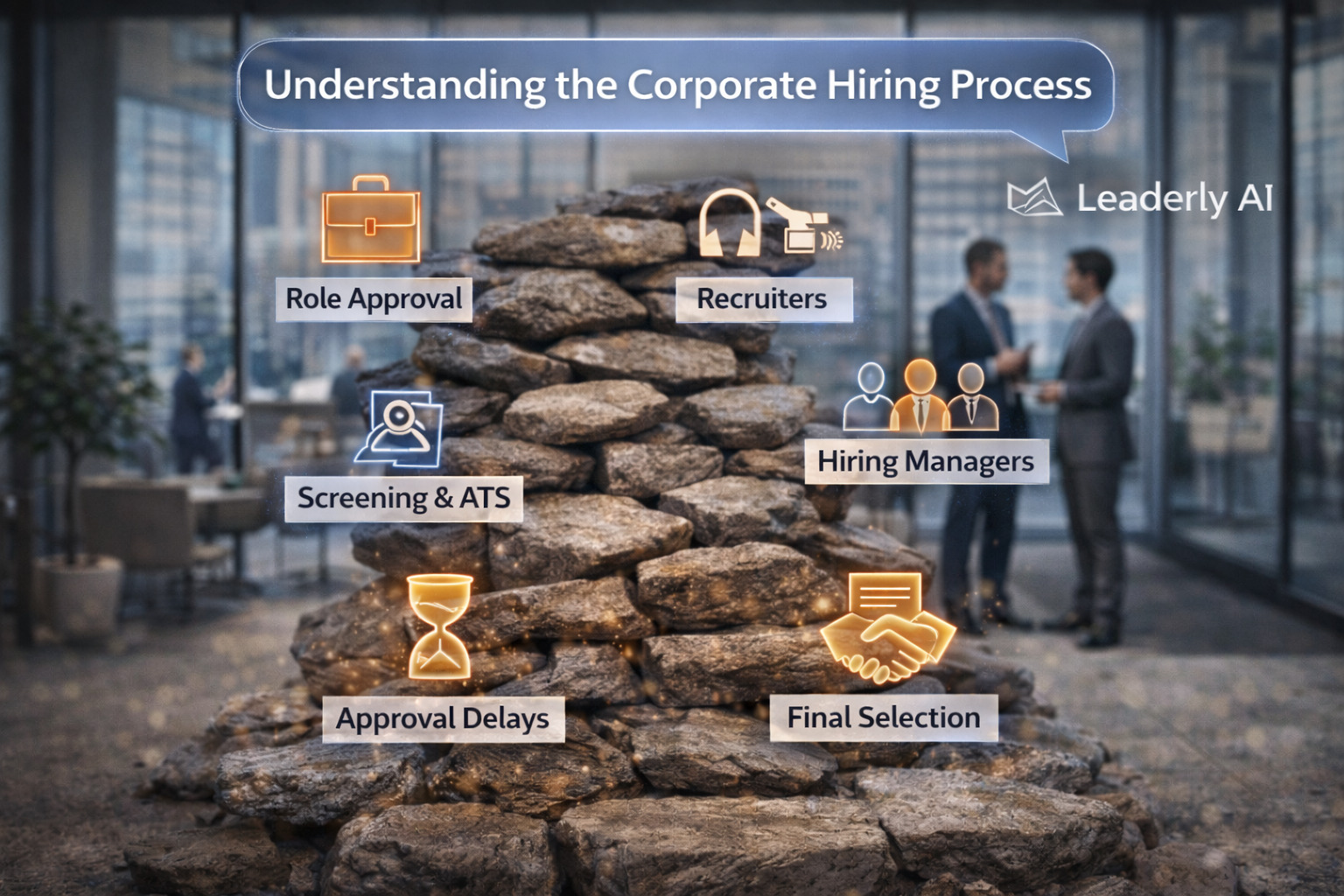
Understanding the Corporate Hiring Process
Leaderly
This discussion provides a comprehensive look into the complexities of corporate recruitment by examining the process from an employer's viewpoint. The dialogue highlights how multiple stakeholders and internal hurdles, such as budget approvals and shifting priorities, naturally extend the time it takes to fill a role. By distinguishing between the logistical focus of recruiters and the technical priorities of hiring managers, the text helps job seekers customize their communication strategies.

Set Specific Goals Not Just Intentions
This LeaderTalk details how to transform abstract career aspirations into concrete, actionable plans within a mentorship framework. By utilizing the SMART criteria, both mentors and mentees can establish defined outcomes, objective metrics, and firm deadlines to ensure their time together is productive.

Building Autonomy with Coaching and Sponsorship
This LeaderTalk serves as a comprehensive roadmap for understanding mentorship, defining it as a collaborative partnership focused on professional and personal advancement. It outlines the diverse formats these relationships can take, ranging from traditional one-on-one pairings to innovative reverse mentoring models.
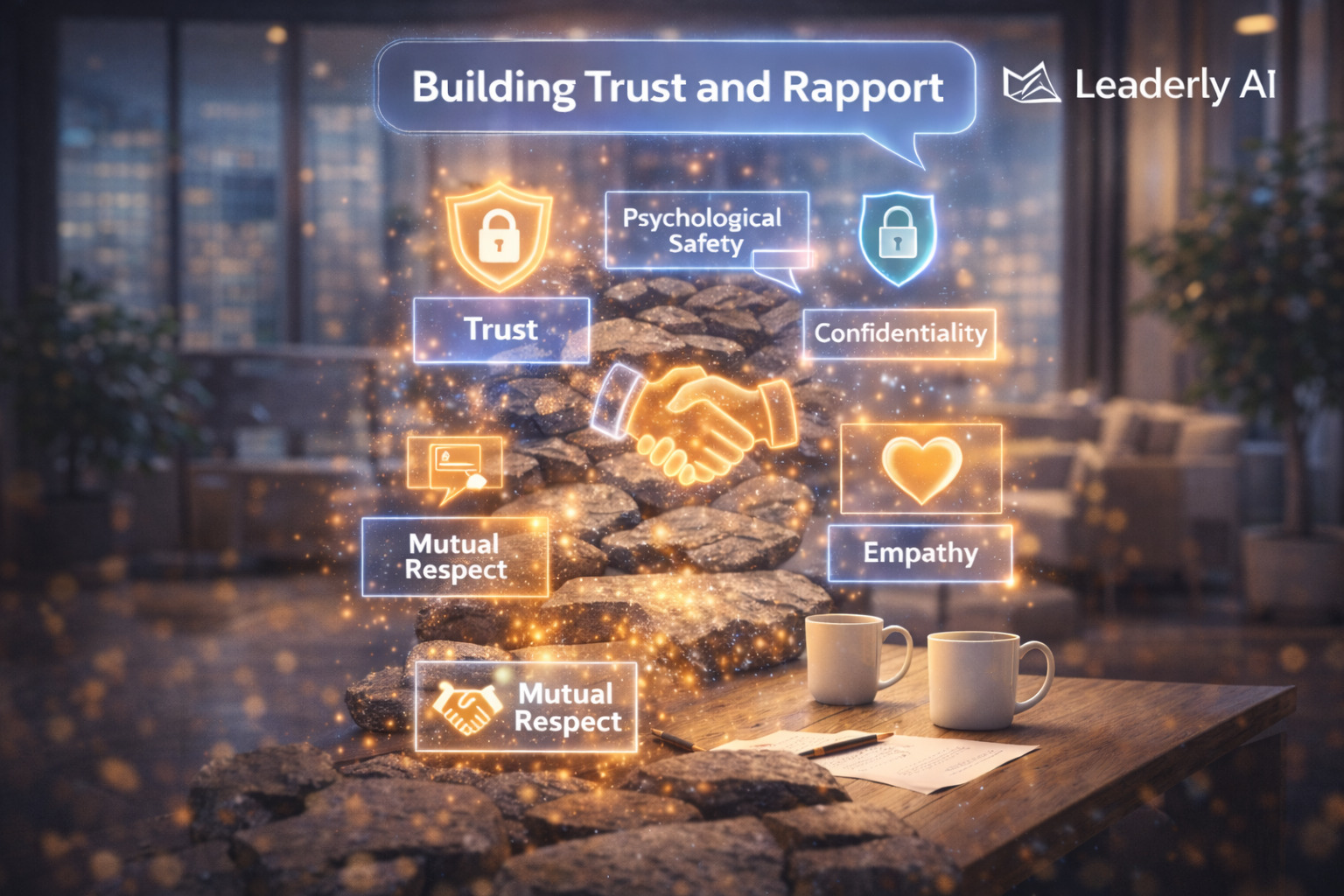
Building Trust and Rapport
Leaderly
This discussion outlines the foundational principles necessary for developing a successful and high-impact mentorship connection. The dialogue emphasizes that trust and rapport serve as the essential groundwork, enabling both parties to engage in honest dialogue and meaningful professional growth. Key strategies highlighted include maintaining consistent reliability, practicing active listening, and ensuring strict confidentiality to foster a sense of psychological safety.

Navigating Mentorship Challenges
Leaderly
This discussion outlines the fundamental obstacles that can hinder mentorship and provides strategies for sustaining a healthy professional connection. The dialogue identifies misaligned expectations and communication failures as primary triggers for friction, while highlighting how power dynamics and time constraints can erode mutual trust. Resistance to feedback and a lack of clear objectives are major barriers that often stall a participant’s development.

Effective Communication - Active Listening
Leaderly
This discussion outlines how active listening serves as the vital foundation for productive mentorship by fostering a sense of psychological safety and mutual respect. The dialogue emphasizes that effective communication requires full presence, the use of open-ended questions, and reflective techniques to ensure both parties are aligned. By focusing on nonverbal cues and avoiding the urge to interrupt, mentors and mentees can build a deeper level of trust that facilitates long-term personal growth.

Leading Your Growth Beyond Mentorship
Leaderly
This discussion helps mentees take ownership of their growth after formal mentorship concludes. It emphasizes that development does not stop when structured guidance ends. The dialogue highlights the importance of building habits that support continuous learning. It also focuses on maintaining meaningful professional relationships beyond the mentorship. Intentional follow-through turns past guidance into long-term progress. Growth becomes sustainable when ownership shifts fully to the mentee.

Evaluating Mentorship Progress
Leaderly
This conversation helps mentors and mentees pause and assess how effectively their mentorship is moving toward shared goals. It emphasizes stepping back from day-to-day activity to reflect on what is working and what needs adjustment. Honest reflection allows both mentor and mentee to surface challenges without defensiveness. The dialogue highlights practical feedback as a tool for clarity rather than criticism. By making progress visible, the mentorship gains renewed direction and purpose. Intentional evaluation keeps growth focused and prevents stagnation.

Knowing When to Transition a Mentorship
Leaderly
This discussion helps mentors and mentees step back and evaluate the mentorship relationship itself. It focuses on recognizing when the original goals have been met or when the relationship has naturally reached a point of completion. Rather than allowing mentorships to fade quietly, the lesson encourages intentional conversations about what comes next. Clear transitions honor the time, effort, and growth both parties invested. The conversation emphasizes closure, clarity, and mutual respect as signs of healthy leadership. Thoughtful transitions ensure the relationship ends with purpose, not uncertainty.

Using the Right Resources at the Right Time
Leaderly
This dialogue explores how mentors can accelerate growth by thoughtfully selecting and applying the right resources for each mentee. Rather than offering every tool available, it emphasizes intentional choice based on the mentee’s goals, readiness, and learning style. The conversation highlights how timing plays a critical role in whether a resource helps or distracts. Mentors are encouraged to assess needs before introducing frameworks, content, or experiences. When support is targeted and purposeful, learning becomes more effective and manageable.

Sustaining Momentum in Mentorship
Leaderly
This conversation focuses on how mentors and leaders maintain motivation, commitment, and forward progress throughout the mentorship journey. It highlights why early enthusiasm often fades without clear structure and intentional follow-through. Consistent connection is presented as a key driver of trust, accountability, and long-term engagement. The discussion emphasizes making progress visible so mentees can see growth and stay motivated. Mentors are encouraged to create simple rhythms that support reflection, adjustment, and steady improvement.

Turning Authorship into Actionable Transformation
Leaderly
This discussion introduces Leaderly AI, an innovative platform designed to help authors convert static books into dynamic, ongoing learning experiences. The dialogue addresses the common problem of knowledge decay, where readers often forget or fail to apply insights once they finish a book. By utilizing the ALPES framework, the technology breaks down complex concepts into actionable microlearning modules, interactive simulations, and personalized feedback loops. This mobile-first approach shifts the reader’s journey from passive consumption to active habit formation and sustained behavioral change.

Get Off the X
Michelle Rigby Assad
This discussion is about the book "Get off the X" by Michele Rigby Assad which adapts elite intelligence strategies to provide a framework for navigating everyday professional and personal challenges. The core concept revolves around leaving the "X," a metaphor for the dangerous stagnation that occurs when individuals fail to act during a crisis. By cultivating heightened situational awareness, leaders can identify subtle environmental shifts and anticipate threats before they escalate. Assad argues that decisive movement is superior to waiting for perfect information, which often results in missed opportunities or paralysis.